
How Noisy are Pellet Burners?
Quick Answer: One of the concerns people sometimes raise when considering a pellet burner is the noise it makes. Unlike a traditional wood-burning stove, a pellet burner has several moving parts, including fans and an automatic pellet-feeding mechanism. It is therefore not completely silent.
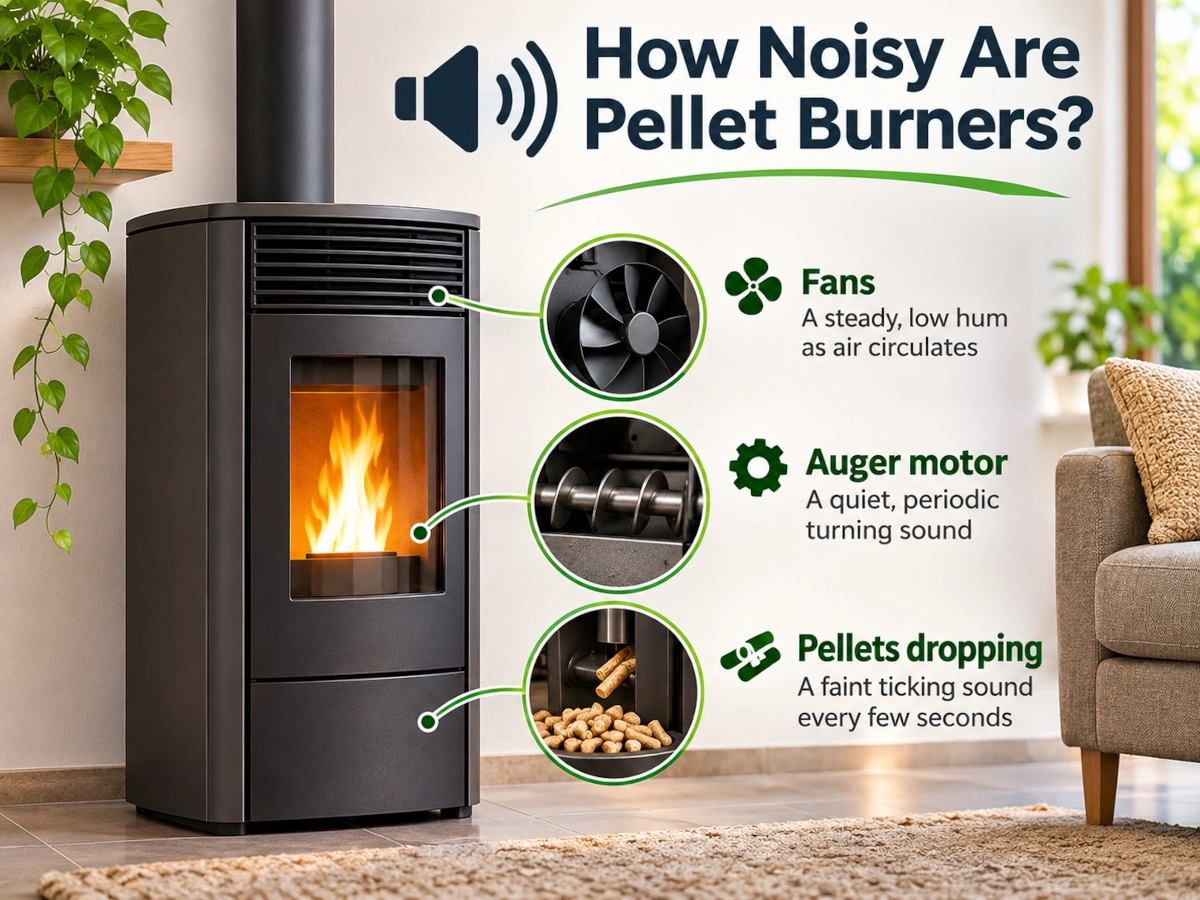
How much noise does a pellet burner make?
Modern pellet burners are designed to operate without creating excessive noise. The actual sound level depends on the make and model, the way the appliance operates, its installation and, importantly, how sensitive you are to background noise.
What sounds does a pellet burner make?
During normal operation, you may hear several distinct sounds:
- Convection fan: This circulates warm air into the room. Depending on the model and selected heat output, it produces a steady hum or whirring sound.
- Combustion extractor fan: This draws air through the burner and removes combustion gases through the flue. It produces a quieter, continuous mechanical sound.
- Auger motor: The auger is the screw mechanism that feeds pellets from the hopper into the burn pot. You may hear a short motor noise at intervals as it operates.
- Pellets dropping: Pellets falling into the burn pot can produce a faint ticking or rattling sound.
- Automatic cleaning: Some burners periodically increase fan speed or operate a cleaning mechanism. This can create a temporary increase in noise.
These sounds are a normal part of the operation of an automatic heating appliance. Their prominence varies considerably between models.
Does pellet stove noise change during operation?
Yes. A pellet burner does not necessarily operate at one constant speed.
When starting, the ignition sequence may involve the extractor fan and pellet-feeding mechanism operating at different speeds. Once the fire is established, the burner settles into its normal operating mode.
Many models reduce their heat output and fan speed as the room approaches the selected temperature. This makes them quieter when operating at a lower setting, although the exact behaviour depends on the manufacturer's control system.
Some appliances also have automatic cleaning cycles or other operating modes which temporarily increase fan noise.
It is worth remembering that a burner running at maximum output will generally sound different from one operating at its lowest setting.
Are some pellet burners quieter than others?
Absolutely. Noise levels can vary between manufacturers and even between models from the same manufacturer. The design and quality of the fans, motors, bearings and casing all play a part.
The way the appliance transfers heat into the room is also important. Some models rely on a convection fan to distribute warm air, while others offer natural convection or reduced-fan operating modes. Where available, these are worth considering if noise is a particular concern.
What can make a pellet stove excessively loud?
A noticeable change in the sound of a burner can indicate that something needs attention.
Common causes include:
Loose panels or components
A loose casing panel, cover, screw or other component can vibrate when the appliance is running. Sometimes a relatively minor vibration can make an otherwise quiet burner sound surprisingly noisy.
Fan contamination
Ash and dust can accumulate around fan blades and internal air passages. Heavy deposits can interfere with airflow and, in some circumstances, contribute to vibration or imbalance. Regular cleaning and professional servicing help prevent this.
Worn fan bearings or motors
A squeaking, grinding or unusually high-pitched noise may indicate worn bearings or a motor problem. This should be investigated by a qualified technician rather than ignored.
Pellet-feeding mechanism
The auger and its motor operate intermittently, so a little mechanical noise is normal. However, persistent knocking, scraping or grinding may indicate an obstruction, excessive friction, a worn component or a problem with the motor.
Poor quality pellets
Foreign material in the pellets or excessive fines can also contribute to feeding problems. We recommend using ENplus A1 certified pellets, although certification alone cannot guarantee quiet operation.
Installation and vibration
An appliance that is not sitting securely on a level surface may transmit vibration into the floor. The same can happen if the flue connection, casing or other components are touching surrounding structures in a way that allows vibration to travel.
Does the position of the burner make a difference?
It certainly can. A burner installed in a large living room may be less noticeable than the same appliance in a small room with hard floors, bare walls and few soft furnishings.
It is worth considering if the burner will be close to a sofa, dining area or bedroom, before choosing its final position.
The room itself can affect how sound is perceived. Hard surfaces tend to reflect sound, while carpets, curtains and furnishings can help absorb it.
Noise can also become more apparent at night, when other household sounds have disappeared.
What should I consider when buying a quiet pellet burner?
If noise is high on your list of priorities, there are a few things worth checking before making a decision:
- Does the manufacturer publish a noise measurement for the model you are considering, and under what conditions it was taken.
- Does the appliance have adjustable fan speeds or a reduced-noise operating mode.
- Does the model offer natural convection, or an option to reduce or disable room-air distribution fans.
Visit our showroom
If you are concerned about the noise made by pellet burners, we would encourage you to visit our showroom and hear one operating for yourself.
You can see how the appliance works, listen to the different operating sounds and discuss which type of burner might best suit your home.
We would prefer you make an informed decision before buying rather than discover afterwards that the normal operating sounds are not what you expected.
A pellet burner is not silent, but with the right choice of appliance and a good installation, noise should not be a reason to rule out this very convenient form of heating.
What to do next
Do you need more information about noise and pellet burners? Contact us today and arrange a visit to our showroom in Ciudad Quesada for a chat and hear real life stoves in action.