
What is a Pellet Burner?
Quick Answer: If you’ve recently installed a Pellet Burner, or you’re considering buying one, our Quick-Start Guide gives you some Handy Tips to get started.
Pellet stoves are efficient, low-maintenance, and perfect for keeping cosy during the cooler months, but like any heating system, pellet burners work best when you understand the basics. Here’s your friendly, straightforward guide to get you going.
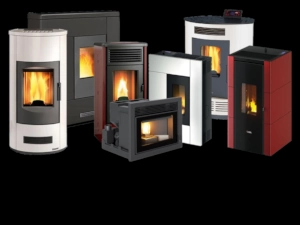
What Is a Pellet Burner?
A pellet burner is a modern heating stove that uses compressed wood pellets, a sustainable, renewable fuel. These pellets are automatically fed into the burn chamber in controlled amounts, allowing for steady heat with minimal effort on your part.
Unlike a wood stove, you don’t need to keep feeding it logs or constantly adjust the air. Once it’s set up, a pellet burner maintains your desired temperature with ease.
How does a pellet burner work?
What are the Key Parts you Should Know
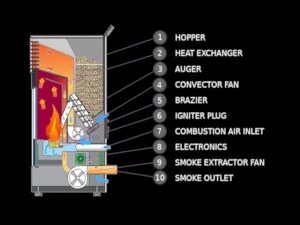
The Starting Up Process:
This is an automatic process controlled entirely by the internal electronics and can not be altered by the user.
- On start-up the Smoke Extractor Fan draws air from the Combustion Chamber which in turn draws air IN through the Combustion Air Inlet.
- At the same time the Auger carries pellets from the Hopper to the top of the feed tube and drops them into the Brazier.
- The Electonic Control Unit (ECU) is fed by various sensors for pressure, temperature and airflow. When it senses that conditions are correct, the ECU switches on the Igniter Plug to ignite the pellets in the Brazier.
- The Smoke Extractor Fan continues to draw Combustion Air through the Brazier to the top of the Combustion Chamber where it then passes through ducts in the Heat Exchanger. The Extractor Fan then pushes the smoke OUT through the Smoke Outlet into the flue or chimney where it is exhausted to outside.
- When the ECU senses that the stove is capable of it's normal running condition, the Igniter Plug is switched off, fan speed is reduced and the Convector Fan is switched on.
Normal Running Condition:
- The ECU changes to control mode where, in addition to the parameter sensors, it now takes into account the power and temperature settings selected by the user.
- The Auger pellet feed rate, Extractor Fan speed and Convector Fan speed are all automatically controlled to deliver heat output in the most efficient way possible.
How long will a pellet burner run for?
A pellet burner will run continuously until one of the following conditions occurs:
- The hopper is empty.
- The timer control switches the appliance off.
- The appliance is switched off manually.
- A set temperature is reached and the appliance shuts down automatically.
- The power supply is interrupted.
- An alarm condition instigates an automatic shutdown.
Important Parts you should know
- Pellet Hopper:
Holds your wood pellets and allows the auger to automatically feed them into the burn chamber. - Control Panel:
Lets you set your desired temperature, fan speed, and timer. Some models have remote controls and Wi-Fi options. - Burn Pot / Brazier:
Where the fire burns. This is where the important action takes place. - Ash Tray / Collection Area:
Collects the ash from the burning process. Although pellet stoves produce less ash than traditional wood stoves, the ash tray also needs daily cleaning during regular use. - Flue & T-Piece:
The flue expels smoke and gases. Some installations include a T-piece at the base of the flue to catch condensation and residue.
How do I keep my pellet burner in tip-top shape?
Daily & Weekly Maintenance Tips
- Clean the burn pot and ash tray daily during colder months when your stove is used regularly. A quick routine which keeps the flame healthy and prevents ash build-up in the system.
- Wipe the glass when needed for a clear view of the flame.
- Check the flue T-piece – This small section at the base of the flue can collect condensation and soot, especially in colder months or when the stove hasn’t been used for a while. Give it a quick clean regularly to keep things flowing.
- Use good-quality pellets to reduce soot, ash, and maintenance time.
Annual Maintenance - Don't Skip It!
Pellet burners are low maintenance day-to-day, but they do require professional servicing once a year. This includes:
- Deep cleaning the internal components
- Checking the fans and sensors
- Inspecting and cleaning the full flue system
- Ensuring safe and efficient operation
How do I choose the right pellets?
Pellets can vary quite a bit in quality, and their performance often depends on your specific stove model or installation. Some pellets that burn perfectly in one stove might cause more ash or smoke in another. We always recommend ENplus A1 certified pellets. They are generally high-quality, low-ash, and suitable for pellet burners.
If you notice your stove running less efficiently or the glass getting dirty quickly, it might be worth trying a different brand of pellet to find the best match for your burner.
What if the stove beeps or shows an error?
Most pellet burners come with built-in safety systems that will alert you if something’s not right. These usually appear as a beep, flashing light, or error code on the screen. Common triggers include:
- A blocked or dirty burn pot
- Ash build-up in the air intake or flue
- A problem with pellet feed
- Loss of power
- Poor ventilation
Don’t worry, there is no need to panic! These alarms are there to keep you safe and protect the stove. Often, a quick clean of the burn pot and ash tray will clear the issue. If the message persists, refer to your user manual or give us a call. We’re always happy to help diagnose and fix the problem.
Pellet Heat – smart, clean and simple
Your pellet burner is a powerful, user-friendly way to heat your home, perfect for Costa Blanca living. With a little daily care, regular cleaning of the T-piece, and yearly servicing, your stove will keep running efficiently all winter long.
What to do next
Need pellets, advice on cleaning kits, or want help understanding your stove’s settings? Get in touch or visit the showroom, we’re always happy to help you get the most from your heating system.
For more information about Pellet Burners, take a look at our Pellet Burner Catalogue.