
How to Get the Best Performance from Your Wood Burner
Quick Answer: A wood burner should provide steady, useful heat when it is operated correctly. The type and condition of the wood, the amount of air supplied to the fire and the way the stove is loaded can all affect how well it performs.
If a stove is difficult to keep alight, produces less heat than expected or is being run either too hot or too slowly, there may be a simple operating issue that can be corrected.
How do I get more heat from my wood burner?
If your wood burner is burning but you are not getting as much heat as expected, there are several things worth checking.
Use properly seasoned, dry firewood: Damp wood uses heat to evaporate its moisture instead of producing useful heat. It can also produce more smoke and deposits in the stove and chimney.
Make sure the fire has enough air: Adding more wood does not necessarily mean more useful heat. A stove works best when it is operated within the conditions recommended by the manufacturer.
Allow the stove to reach its normal operating temperature: A fire that is continually kept too low will not burn efficiently.
Other things to consider
If the stove is burning well but still cannot heat the room adequately, the size and output of the stove may be too low. A stove that is too small for the space may simply not be capable of providing the amount of heat required.
Room heat loss can also make a significant difference. A well-insulated room will retain heat much more effectively than a poorly insulated one.
Why won't my wood burner stay lit?
A fire that repeatedly goes out can be caused by poor draught, but there are several other possibilities:
- The wood is properly seasoned and dry.
- There is enough fuel for the stage of the fire.
- The air controls are being used correctly.
- The chimney has established a good draught.
- The chimney or flue isn't restricted.
Trying to reduce the air supply too soon after lighting can also cause the fire to struggle.
If the stove has always had difficulty maintaining a fire, poor draught or another installation problem may be worth investigating.
What does the baffle plate do?
The baffle plate is fitted inside the upper part of a wood burner combustion chamber. Depending on the stove design, there may be one or more.
It helps control the path of hot gases through the stove, keeping them in the combustion chamber for longer before directing them towards the flue. This helps the stove extract more heat before the gases leave the appliance.
The baffle plate is therefore an important part of the stove, not simply a piece of metal getting in the way.
Is your baffle plate missing?
It sounds like an odd question, but it's worth checking. A baffle plate can become damaged over time, and it can also be removed and not replaced.
If you have bought a second-hand stove, inherited an installation, or simply aren't sure whether your stove has a baffle plate, check the manufacturer's instructions or compare the inside of the stove with the correct parts diagram.
A missing or incorrectly fitted baffle plate can significantly affect how the stove operates.
Can I overburn my wood stove?
Never overburn the stove. Do not exceed the operating temperatures recommended by the manufacturer.
Any of the following can cause a wood stove to overburn:
- Loading too much wood.
- Running with the air controls fully open for too long.
- The air controls are being used correctly.
- Burning unsuitable materials.
Overburn can place excessive stress on the stove and its components, potentially causing damage and shortening the life of the appliance.
More wood does not necessarily mean more effective heating. You may produce more heat, but much of that extra heat can simply disappear up the chimney.
The stove should be operated within the conditions recommended by the manufacturer rather than trying to extract as much heat as possible from it.
Can I let my fire smoulder overnight?
It is tempting to reduce the air supply and allow a fire to smoulder slowly overnight, but this is not a good way to operate a wood burner.
A fire that smoulders is starved of air and will burn poorly and produce incomplete combustion. This can increase smoke and deposits within the stove and chimney, leading to the formation of creosote.
A wood burner is designed to burn wood with an appropriate supply of air, rather than being deliberately kept at a very low level for long periods.
Always follow the manufacturer's instructions for operating your particular stove, especially when reducing the air supply before going to bed.
What temperature should a wood burner run at?
A wood burner needs to reach a suitable operating temperature for efficient combustion.
Running a stove continuously at very low temperatures can result in incomplete combustion and increased deposits in the stove and chimney.
Running a stove at very high temperatures is just as bad.
To burn a stove properly, a stove pipe thermometer is a really handy device. The most common type is a magnetic clamp-on that is attached to the stove pipe above the stove. They are slower to react and not as accurate as probe types but they will tell you all you need to know to ensure the stove is operating at the correct temperature.
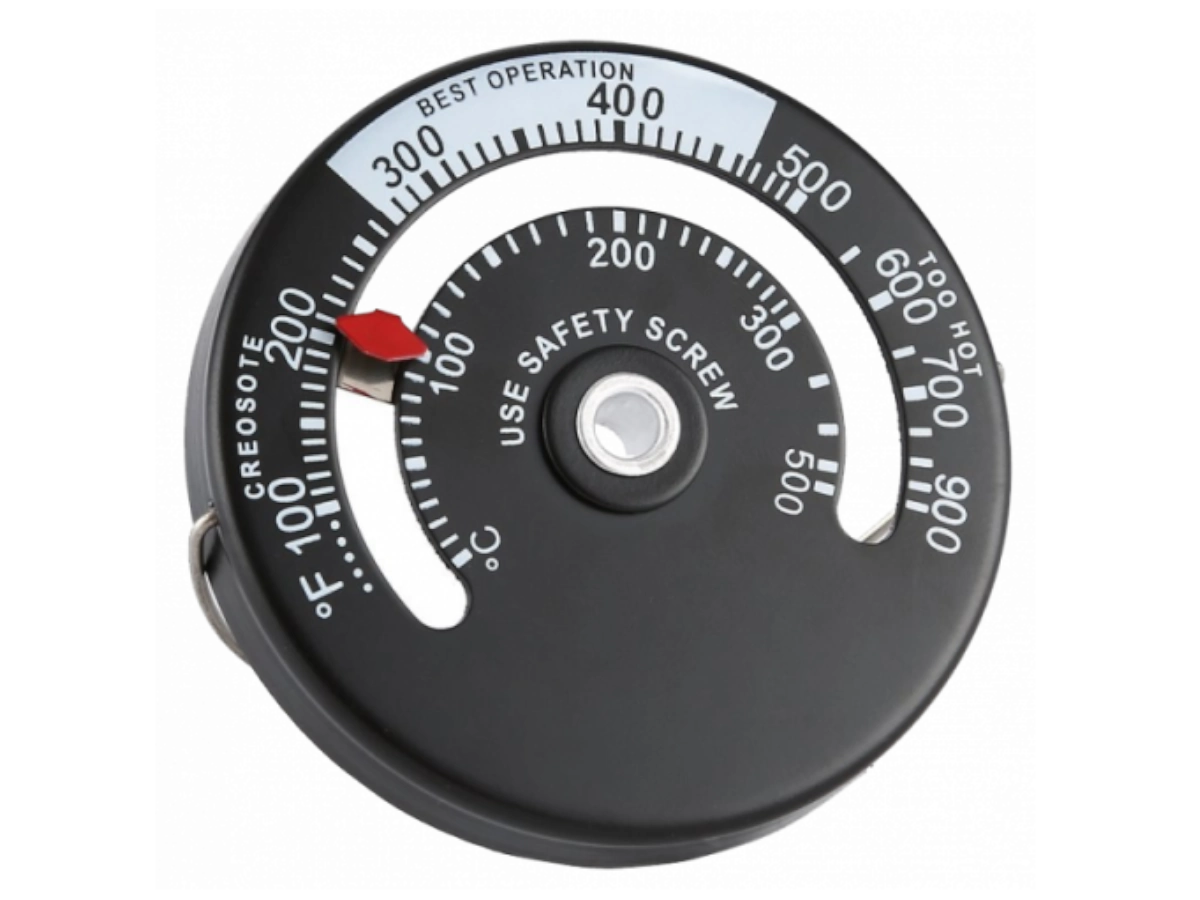
Getting the best from your wood burner
Good stove performance is largely about operating the appliance correctly.
Use properly seasoned, dry wood, give the fire the air it needs, avoid overloading the stove and allow it to reach its normal operating temperature. Don't deliberately starve the fire or try to make it produce more heat than the appliance is designed to provide.
If a stove continues to perform poorly despite being operated correctly, the chimney, flue, installation or size of the stove may need to be checked.
The manufacturer's instructions should always take priority, as different wood burners can have different operating requirements.
What to do next
If you need further assistance with your wood burning stove, please get in touch with our showroom staff.