
How do I Maintain my Wood Stove?
Quick Answer: A wood-burning stove needs regular cleaning and occasional checks to keep it working properly. Empty excessive ash, keep air inlets clear, check door seals and accessible components for wear, and inspect the flue system where accessible.
The chimney or flue should also be swept and inspected regularly. Good routine maintenance helps maintain performance, identify developing problems and prepare your stove for the next heating season.
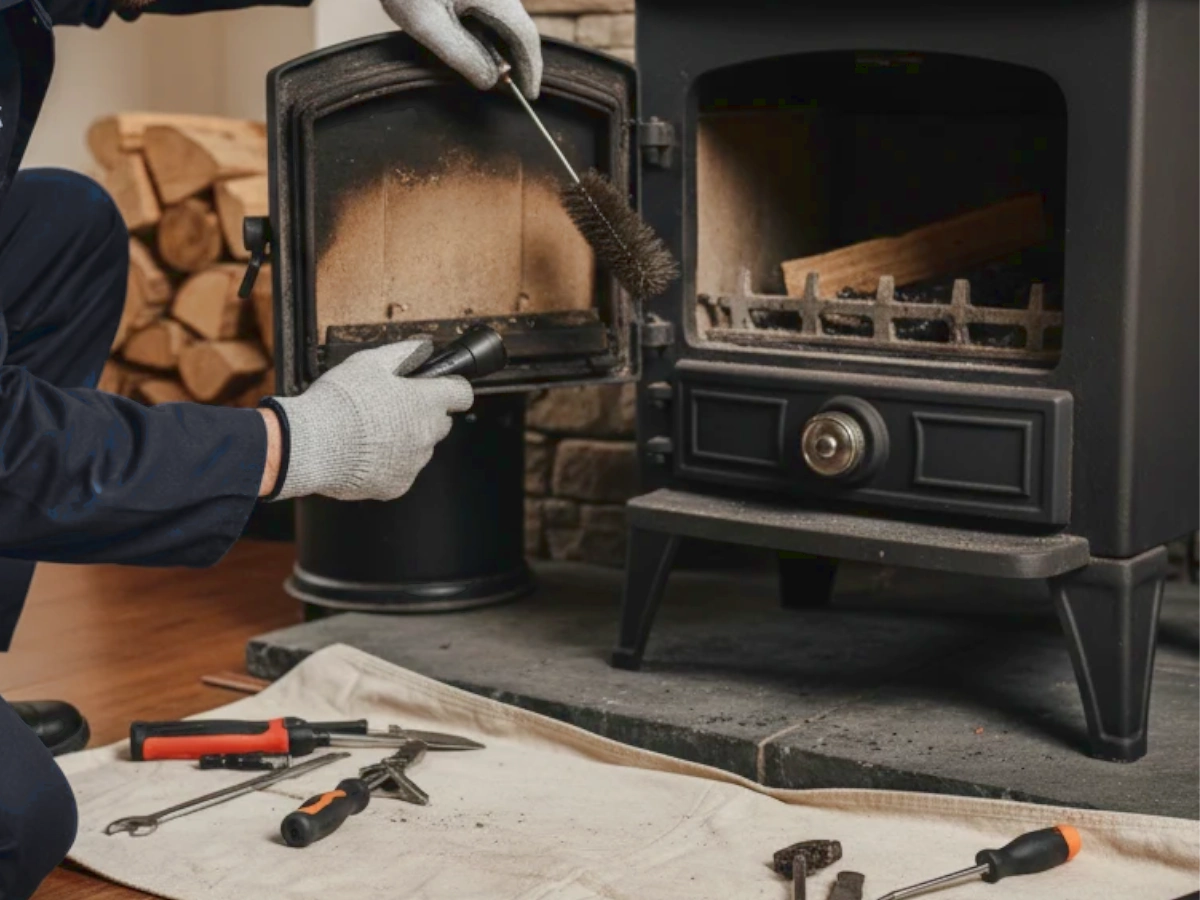
What should I include in my regular wood burner cleaning routine?
Always allow the stove to cool completely before cleaning.
Routine cleaning should include:
- Removing excessive ash: Empty the ash pan regularly to prevent ash from obstructing the air supply. A small bed of ash can be useful when burning wood, but excessive ash should not interfere with the operation of the stove.
- Keeping air inlets clear: Check that air controls and inlets are free from ash and other obstructions.
- Cleaning the glass: Clean the glass when necessary, using a suitable stove-glass cleaner or other appropriate cleaning method. See our article Why does my Wood Stove Glass go black? for further details.
- Checking the door seals: Look for signs of deterioration or damage to the rope seals and gaskets around the door and glass. A worn or damaged seal can allow uncontrolled air into the firebox bypassing the air controls. They may also prevent the door from closing properly.
- Checking accessible internal components: Look for obvious wear, damage or excessive deposits on components such as grates, baffle plates and firebox linings, where fitted.
Every mark or small change does not mean a component needs replacing. Seek advice if you are unsure whether the condition could affect safe operation. Have the problem assessed rather than simply ignoring it.
The frequency of cleaning will depend on how often the burner is used and the type and quality of wood being burned. Always follow the manufacturer's instructions for your particular model.
How do I check the flue tee?
Some wood burner installations, particularly those using an external flue, have a component near the base known as a tee piece or inspection tee.
The tee provides an important accessible point where ash, soot and other combustion deposits can collect. Moisture may also accumulate inside it through condensation or, occasionally, rainwater entering the flue terminal during adverse weather conditions.
Finding a small amount of ash, damp soot or moisture inside the tee does not necessarily indicate a fault.
If your installation has a tee piece, make a point of checking it periodically, particularly during the heating season. Remove accumulated ash, soot, debris or water. As a simple reminder, Ambience recommends checking it monthly. Depending on what you find, it may need cleaning more frequently.
Allowing deposits to accumulate can restrict the flue and contribute to poor combustion, reduced performance, excessive smoke or smoke entering the property. Persistent moisture may also contribute to corrosion and damage.
If you are unsure whether your installation has a tee piece, contact the Ambience team.
What should I do if the property is unoccupied for a long time?
If you are leaving your Spanish property unoccupied for an extended period, take a little time to prepare the burner before you go.
- Allow the stove to cool completely.
- Remove all ash and any unburned wood.
- Leave the firebox clean and dry.
- Check the accessible parts of the stove and flue system for obvious problems.
Keeping a wood burner clean and dry helps reduce moisture-related problems and leaves it ready for use when you return.
What to do next
Regular attention helps keep your wood-burning stove in good working order for years to come.
If a component appears damaged or the burner is not operating as it should, it is better to investigate the problem than allow it to develop.
If you are unsure about the condition of your stove or the flue system, contact the Ambience team for advice.